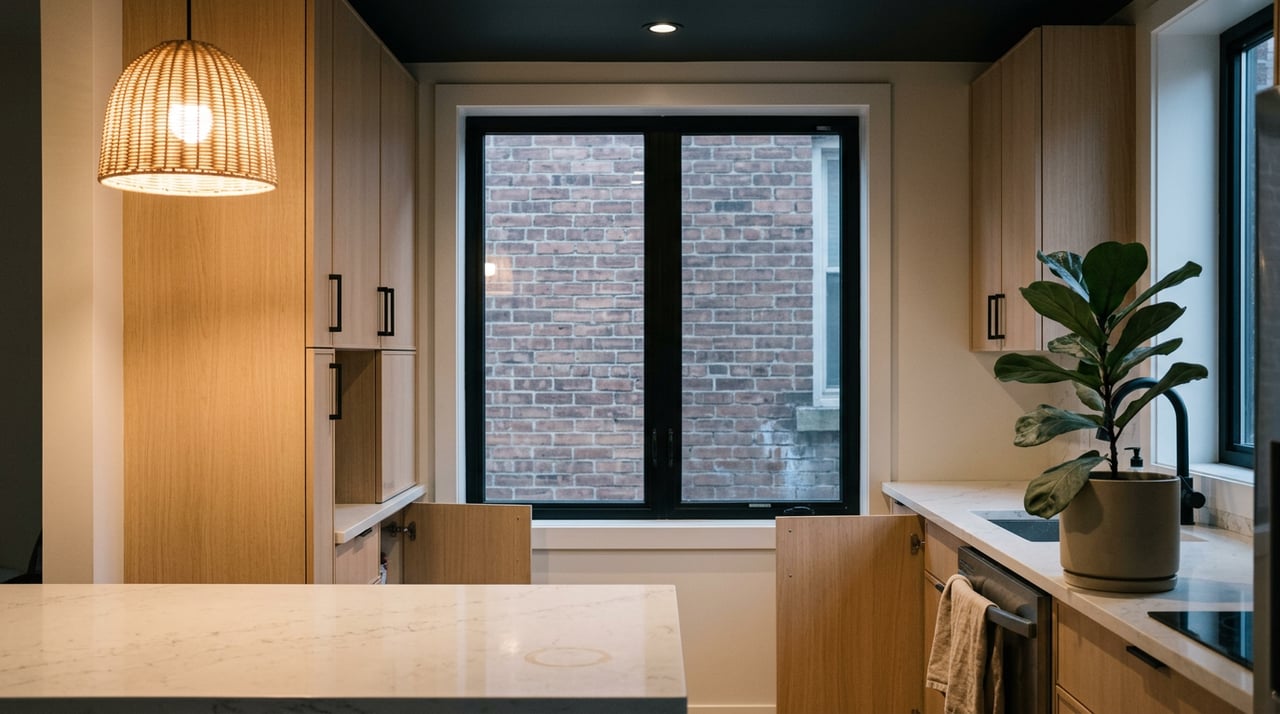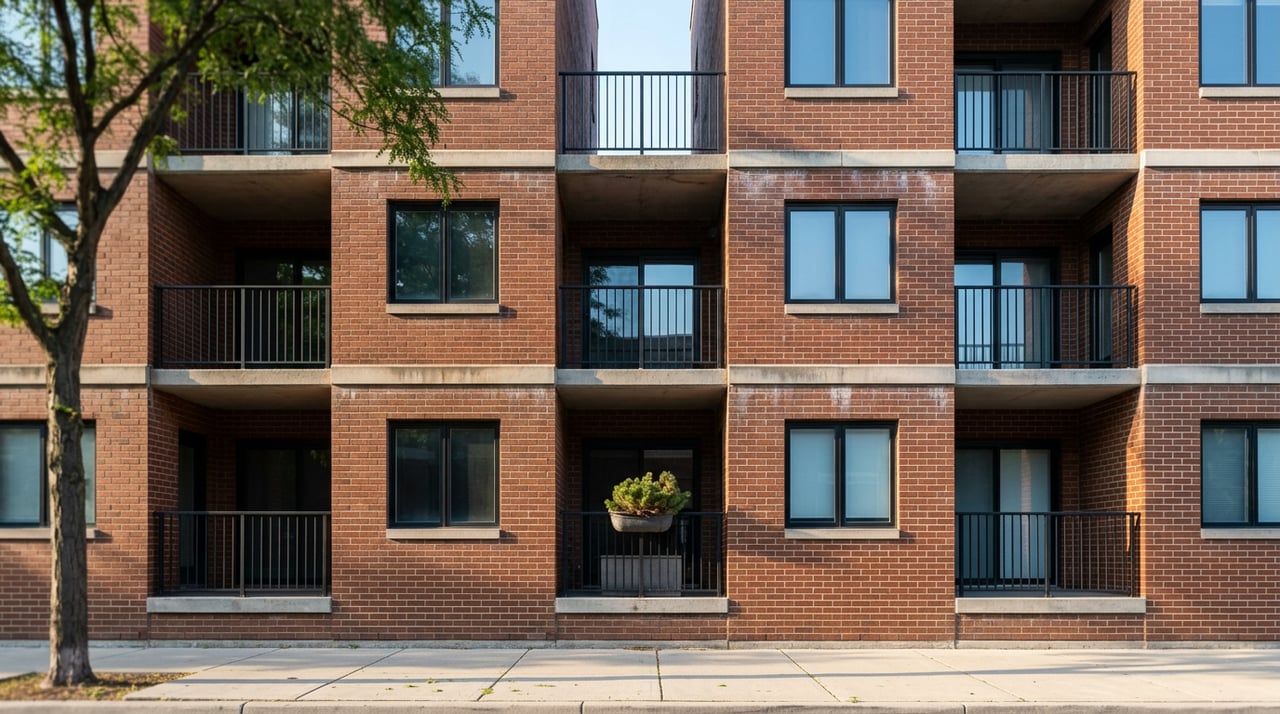
Two units listed recently in the same downtown Colorado Springs condo building. Same address, same roof, same HOA board. One priced at $135,000. Another at $550,000. Square footage explains part of that gap. It does not explain all of it.
That building is Citywalk Downtown Lofts, a 12-story, 83-unit condominium at 417 E Kiowa Street that went up in 1962. Its HOA fee runs anywhere from $500 to $1,800 a month, and that fee covers nearly everything: heat, water, sewer, trash, snow removal, structural maintenance, even security. It is one of the more all-inclusive fee structures downtown, which sounds like a selling point until you ask why the range is sixteen hundred dollars wide inside one building. The answer has nothing to do with paint color or countertops. It has to do with which floor, which square footage tier, and which capital assessment cycle a given unit happens to sit in.
This is the piece of due diligence that a median price cannot do for you, and as of this year, neither can a new state law that was supposed to help.
What the median actually blends together
Downtown's median sale price sat at $347,000 over the three months ending June 2026, down 21.9% from the same period a year earlier. Condo-specific listings carried a separate median of $550,000 as of late August 2026. Earlier in the year, in March 2026, the broader downtown median (houses and condos combined) came in at $415,000, with condo listings themselves spanning $400,000 to $1,550,000 and averaging 93 days on market.
Every one of those numbers is real. None of them tells you what you are actually buying. A $415,000 median in a market where individual condo units in a single building have ranged from $135,000 to $660,000 (that top figure a real closed sale from June 2024) is not describing one product. It is averaging a 1960s masonry high-rise with a 300-square-foot studio against a renovated loft with mountain views and two heated garage spaces. The median is honest. It is also nearly useless for deciding what you should pay for a specific unit in a specific building.
The variable that actually predicts your monthly cost and your resale risk is the building's age and the health of its reserve fund. That is where the new law comes in, and where it stops short.
The law that took effect this summer
Colorado's House Bill 26-1099, signed by Governor Polis in April 2026, took effect August 12, 2026. It requires a declarant, the developer who controls a common interest community before homeowners take over the board, to commission an independent 30-year reserve study and hand it to the association before that transfer of control happens. It closes a real gap: boards used to inherit whatever funding assumptions a builder had made, with no outside check.
It is a good law. It is also a narrow one. A broader version of this idea was floated back in 2022, one that would have pushed tiered professional studies and a required update schedule onto every existing association in the state, not just new ones. Governor Polis vetoed that version, citing the financial strain it would put on smaller associations. The bill that actually passed in 2026 is deliberately narrower.
It leaves existing communities under the old disclosure-only rule and instead targets turnover.
That framing matters because HB26-1099 only reaches communities still under declarant control at the moment of transition. A building like Citywalk, built in 1962 and decades past any developer handoff, was never touched by this. Under Colorado's existing framework, the Common Interest Ownership Act, an association like that only has to adopt a written policy describing whether it does reserve studies and how it funds them. The policy is required. The study itself is not.
So the practical result: if you are shopping new construction or a recently converted building still transitioning from builder to owner control, the state now guarantees you a professional 30-year reserve study before you close. If you are shopping one of downtown's older, more architecturally distinct buildings, the ones with exposed brick, tall windows, and character no new build replicates, you get exactly the same protection you had last year. Which is to say, you get a policy statement, not a number.
What "policy, not a study" looks like in practice
This is not a hypothetical risk. Colorado's HOA disclosure rules exist because underfunded reserves are common, and when reserves run short, the association's only remaining tool is a special assessment, a one-time bill on top of your regular dues. In Colorado, those assessments are frequently tied to hail and wind damage, rising insurance deductibles for multifamily buildings, or capital items like roofs and elevators that a thin reserve fund never fully covered.
None of that shows up in a listing price. It shows up eighteen months after closing, in a letter from the board.
For a downtown buyer, the fix is not complicated, but it does require asking for documents the seller is not obligated to volunteer unprompted. Before writing an offer on any condo in a building older than a few years:
- Request the most recent reserve study, if one exists, and note its date. Anything older than three to five years is stale by industry practice, even if state law does not require an update.
- Ask what percentage of the recommended reserve target is actually funded. Below roughly 70% is generally considered a red flag for near-term assessment risk.
- Ask directly whether any special assessment has been levied or discussed in the past three years, and get the answer in writing through the resale package, not verbally from a listing agent.
- Compare the association's budget to its actual spending over the last twelve months. Consistent overruns in maintenance or insurance line items tend to predict a dues increase or assessment before they show up as either.
- If the building is a masonry conversion or anything built before the 1990s, treat a building-envelope or structural review as worth the cost, not an optional upgrade to your inspection.
You have the right to request most of these records under the Colorado Common Interest Ownership Act. Exercising that right is the part the new law does not do for you.
Reading the fee itself
Downtown's condo stock breaks roughly into three tiers, and the monthly number tells you which one you are looking at before you ever see a reserve study.
| Building type | Typical monthly HOA range | What it usually covers |
|---|---|---|
| Small historic conversion | ~$200 | Exterior upkeep, common lighting, snow removal; often thinner reserves |
| Mid-rise with shared amenities | ~$450 | Building insurance, water, elevator, fitness room, exterior maintenance, reserves |
| Full-service high-rise | $700+ | Concierge, garage maintenance, security, higher insurance, deeper reserves |
Citywalk's $500 to $1,800 span crosses all three tiers inside one address, because its fee scales with unit size and whether a given owner's assessment covers a deeded garage space. That is a structural fact about the building, not a red flag by itself. It is a reminder that in a building this old, the fee on the listing sheet is the start of your homework, not the end of it.
What this means for your search
If you are comparing downtown condos against a listing site's median price, you are comparing the wrong number. The median tells you what downtown looked like in aggregate over a quarter. It does not tell you whether the specific building you are touring has a funded roof replacement or a deferred one. The new state law raised the floor for brand-new buildings and left the floor exactly where it was for everything else, which happens to include most of what makes downtown's condo market distinctive in the first place.
That is not a reason to avoid an older building. Some of downtown's most appealing units, the ones with the industrial ceilings and the walk-to-everything location, are in exactly this category. It is a reason to ask for the reserve study before you ask about the countertops.
If you are weighing a downtown condo purchase and want a second set of eyes on a building's HOA financials before you write an offer, DogHouse Real Estate Group can help you read the disclosure package and know what questions to ask the board. Schedule a free consultation and we will walk through the specific building you have in mind.