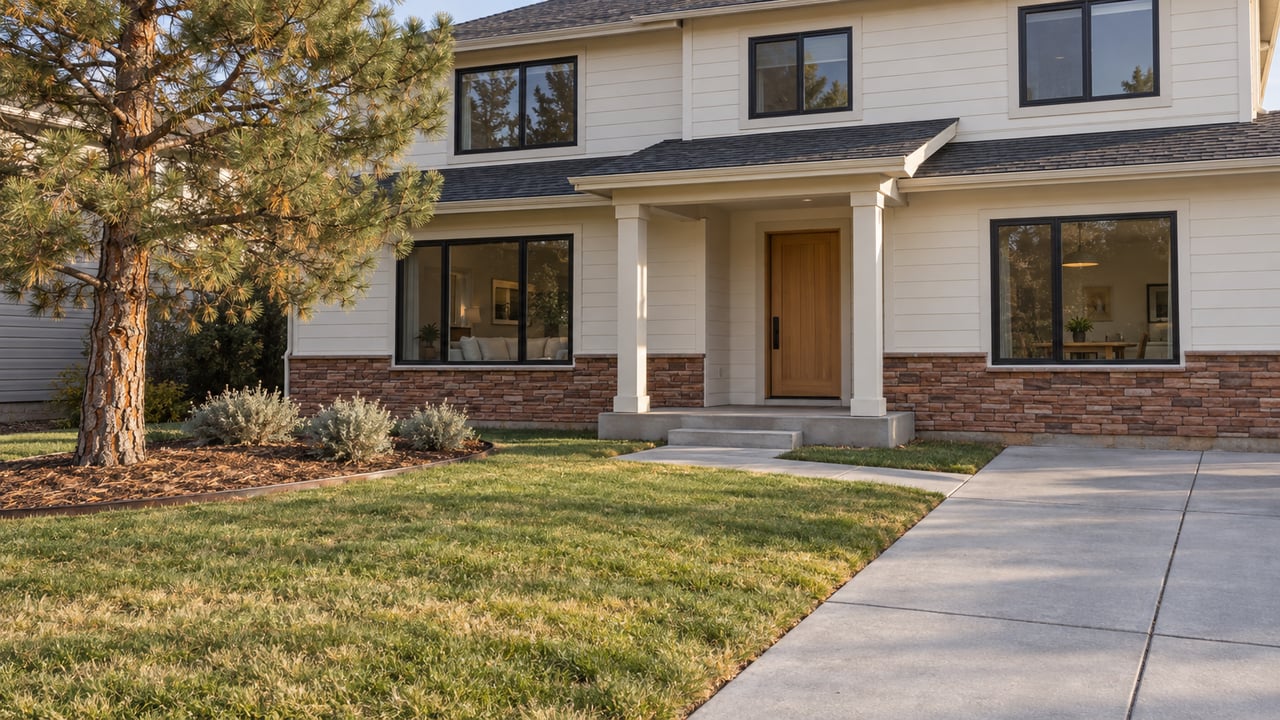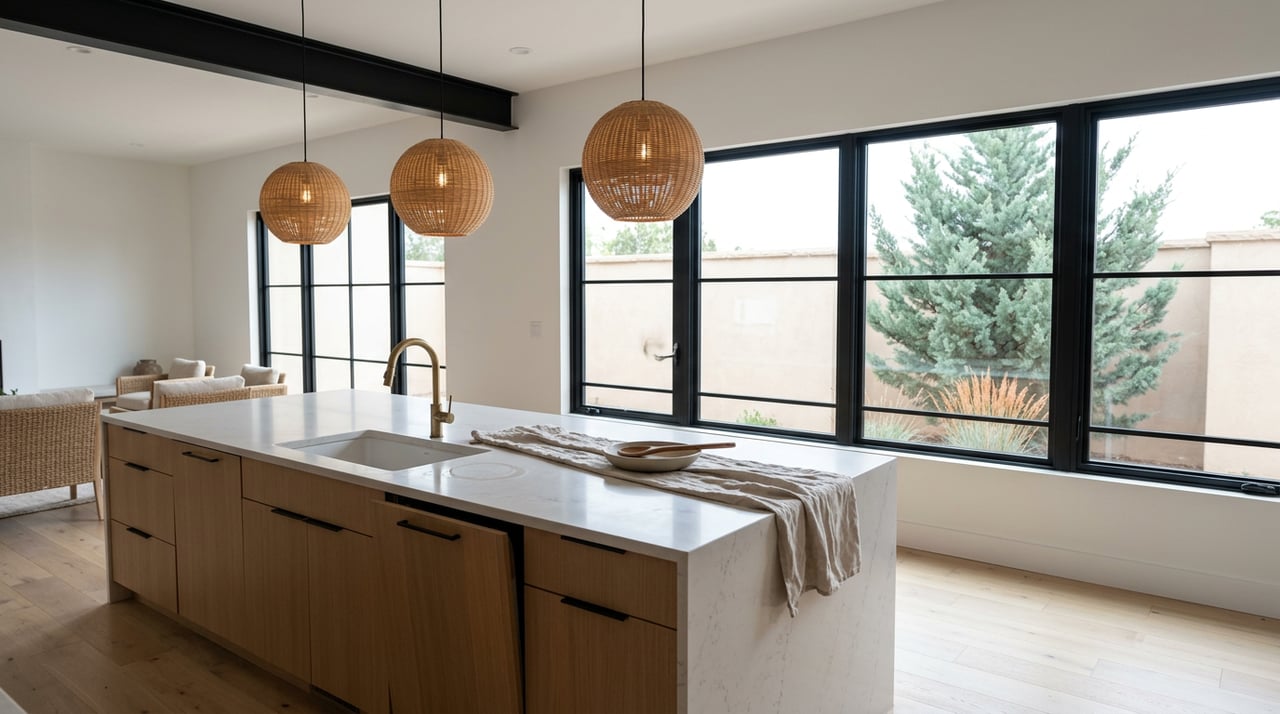
Two houses in Monument can sit at the same price point this fall, both freshly painted, both with the same granite countertops and the same three-car garage. One of them draws water from a well that's been losing ground for years. The other pulls from a blended supply that includes renewable surface water. The listing sheet may not identify which water supply serves each property.
That gap is the thing worth understanding before you write an offer in Monument. The variable that predicts what your water bill looks like in five years isn't the subdivision name or the school boundary. It's which utility actually serves the tap, and in a town split across four separate water providers, that answer changes block by block.
Four Utilities, One Town
Monument doesn't have a single water system. It has four, and they're not interchangeable.
The Town of Monument runs its own Water Department, drawing from eight active wells that tap into three Denver Basin aquifers, the same non-renewing groundwater source that has defined water planning across northern El Paso County for years. Triview Metropolitan District serves the town's east side and has been on the Northern Delivery System since it came online in 2024, a supply that blends in renewable water rather than relying on wells alone. Woodmoor Water and Sanitation District, based in Monument, funds part of its renewable-water infrastructure through a Renewable Water Investment Fee it adopted back in 2011. Donala Water and Sanitation District covers another slice of the area and has its own separate rate structure and priorities.
A buyer looking at three properties in the same price range could be comparing a well-only connection, a blended-supply connection, and a district with a dedicated renewable fund already fifteen years into paying for its future. The address won't tell you which. The parcel will.
The Town's Own System Is the One Under the Most Pressure
In April 2026, a consultant from Willdan Financial Services told Monument's town council that the Water Department's enterprise fund was running a structural deficit, one that would drain its reserves by 2029 if nothing changed. The recommendation on the table was a base water rate increase of 10 percent a year for five consecutive years, stacked on top of the rate residents were already paying, which at the time worked out to about $112 a month for a typical single-family home using 6,000 gallons.
"The status quo is not an option for us at this time."
As The Gazette reported, that's how the consultant put it to the council, and it wasn't hypothetical for long. On September 1, 2026, the town's board-approved water rate increase went into effect, the first move in what council members had already signaled would be a multi-year climb. Councilman Steve King pushed back on the framing that Monument was somehow an outlier, noting the town's water enterprise, dependent entirely on wells, isn't a fair comparison to providers with access to renewable sources. He's right that it's not the most expensive system in the region. It's also not the cheapest path forward, and the trajectory is now locked in rather than proposed.
The Divide Line That Now Decides Who Gets New Water
As The Gazette reported, in February 2026, Monument's council passed a resolution blocking new town water connections north of the Palmer Divide, the ridge that splits drainage between the Arkansas and South Platte river basins and runs right through the area near Beacon Lite Road. The reasoning wasn't abstract. One of the renewable water projects the town has been eyeing, the Northern Delivery System, restricts water use north of that line, and council wanted to keep the option open rather than lock itself out by extending service to new parcels in the wrong spot.
The resolution landed in the middle of an active fight over a proposed Buc-ee's travel center at the Interstate 25 and Palmer Divide Road interchange, a project that had been trying to annex into water service for more than a year. Whatever happens with that specific project, the episode is a clean illustration of something buyers should internalize: in Monument, which side of an invisible hydrological line a parcel sits on can determine whether it gets a water connection at all.
The Loop Project's Membership Changes
For a few years, the plan for towns like Monument stuck on depleting wells was regional cooperation. The Loop, a pipeline and pumping project that would move water from Fountain Creek north and east to member districts, was one of the more promising options, first estimated between $160 and $190 million and more recently priced closer to $134 million.
In August 2026, Monument's town council voted unanimously to begin exiting that multidistrict authority, citing cost. Donala Water and Sanitation District, one of the other partners, was also preparing to withdraw around the same time. If Monument completes its exit and Donala withdraws, the Loop would have just two remaining members, including Woodmoor Water and Sanitation District, down from the original four. Woodmoor's district manager has stayed publicly committed to the idea, arguing the project's core purpose, weaning member districts off nonrenewing groundwater, still holds even with fewer partners at the table.
For a buyer, the practical point is that the Loop's future membership remains unsettled. Differences between wells-only service and blended renewable service may persist while towns consider a path forward.
What This Means When You're Comparing Two Houses
There's one more wrinkle worth knowing if you're looking at new construction or considering a rental strategy. Last year, Colorado lawmakers passed House Bill 1211, a law aimed at reining in one-time tap fees charged to connect new buildings to a water system. The law requires special districts to consider offering discounts tied to water-efficient construction, as The Colorado Sun reported.
Before you get attached to a specific Monument property, it's worth running down a short list:
- Which water utility actually serves this parcel? The mailing address won't answer this. The provider will.
- Is the connection on Town of Monument wells, or on Triview, Woodmoor, or Donala service?
- What has that provider's base rate done in 2026, and is there a published multi-year plan?
- If this is new construction, what's the current tap fee, and does the provider fall under HB 1211's special-district requirements?
- If the parcel sits near the Palmer Divide, has the town's north-south restriction affected this address or its ability to expand service?
These provider details are worth confirming before closing because they can affect the utility bill after you move in.
A Few Quick Questions
Does a home's water provider affect its resale value in Monument? Not in a way that shows up on paper today, since none of the providers publish a price premium or discount tied to their service. What it affects is the buyer's long-term cost exposure, which is the kind of thing that shapes negotiations more than headline price.
Can I find out which provider serves a specific address before I tour it? Yes. The Town of Monument publishes its own rate and fee schedule, and each special district maintains its own service-area information. It's a five-minute check that's worth doing before you fall for a house.
Is Monument's water safe to drink right now? Nothing in current reporting suggests a water quality problem in Monument. The concern raised by the town's own consultants and council members is about long-term supply and cost, not safety today.
Talk to Someone Who Tracks This For a Living
Water provider boundaries in Monument don't map cleanly to subdivision names, and the rules governing each one keep shifting as towns like Monument, Woodmoor, and Donala consider the Loop's future. If you're comparing homes across this town and want someone to run down which utility actually serves a specific address before you write an offer, DogHouse Real Estate Group can walk that ground with you. Schedule a free consultation and we'll get into the specifics of the property you're actually considering.
This article is general information, not legal, tax or financial advice. Consult a qualified professional about your situation.