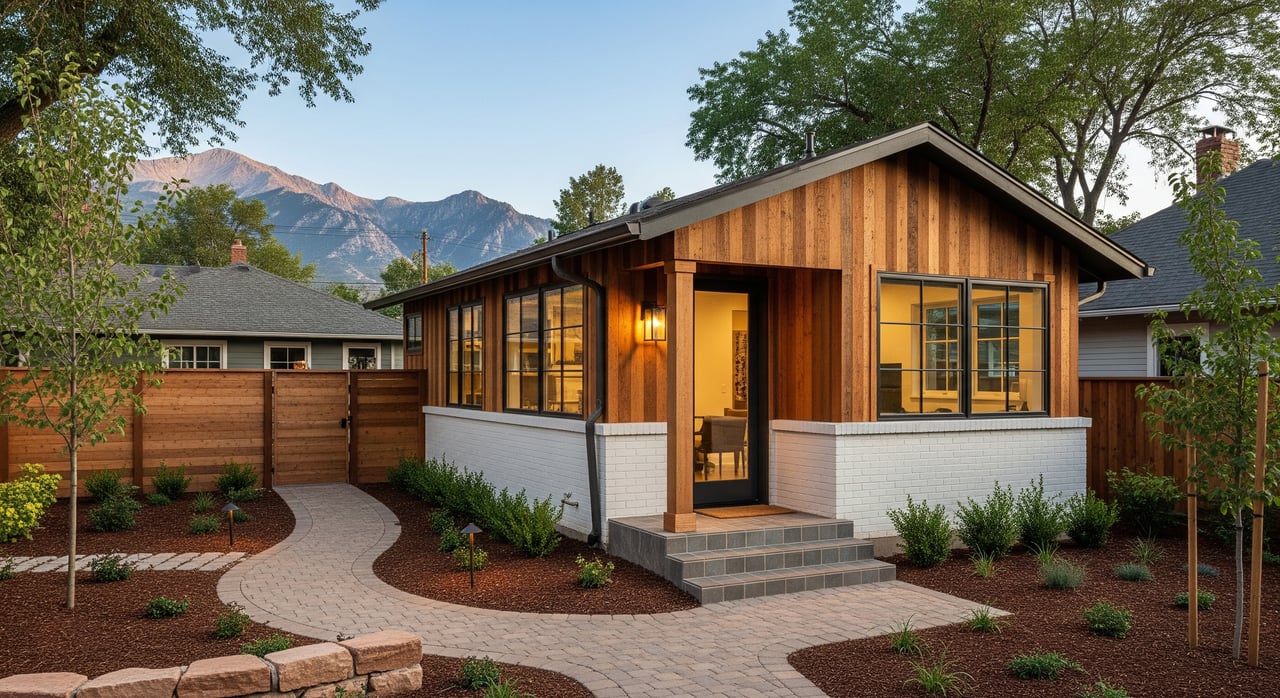
Thinking about adding a small second home on your Old Colorado City lot? You are not alone. Many owners want flexible space for family or steady rental income, but the rules and site realities can feel confusing. In this guide, you will learn what an ADU is, how OCC’s alleys and historic character affect feasibility, and the exact steps to check your property before you spend on design. Let’s dive in.
ADU basics, made simple
What an ADU is
An accessory dwelling unit is a smaller, independent home on the same lot as your main house. It has a sleeping area, a kitchen or kitchenette, a bathroom, and a separate entrance. You may hear ADUs called granny flats, in‑law suites, carriage houses, or backyard cottages.
Common ADU types
- Interior conversion of space inside your home, such as a basement apartment.
- Attached addition that functions as a separate unit with its own entry.
- Detached backyard cottage, either over a garage or as a stand‑alone structure.
- Garage conversion or an above‑garage unit.
- Modular or prefab ADU placed on a permanent foundation.
Typical uses and benefits
ADUs can support multigenerational living, long‑term rentals, short‑term rentals if allowed, and uses like a studio or caretaker unit. Benefits include flexible living options, potential rental income, and added property value. Tradeoffs include construction cost, reduced yard or parking, more utilities and maintenance, and possible historic or design review.
How ADUs fit in Old Colorado City
Lot patterns and alleys
OCC’s older grid has many smaller lots. That can make large detached cottages harder to fit, but it often favors interior conversions or smart attached designs. Alleys behind some blocks are a major advantage. Rear access can simplify construction, reduce the need for new curb cuts, and support garage conversions or detached ADUs placed near the alley.
Historic character and design review
Parts of OCC include historic resources and areas where exterior changes face preservation or design review. New visible structures, additions, and some exterior alterations may need a certificate of appropriateness. That review can affect massing, rooflines, materials, and placement. Plan for this early if your property is in a historic area.
Zoning, parking, and utilities
ADU rules are local and vary by zoning district. Size limits, setbacks, height, and lot coverage all shape what you can build. Some areas may require on‑site parking or have limited waivers, especially in historic contexts. Most properties in the city’s service area have municipal water and sewer, but any capacity constraints or septic systems will impact feasibility and cost.
Policy can change
Municipal policy evolves. Always confirm current zoning and ADU rules with the City of Colorado Springs planning and permitting offices before you hire a designer or order plans.
Which ADU type works best in OCC?
Interior conversion
- Pros: Usually the lowest cost and keeps your yard intact. Less likely to trigger exterior design review.
- Cons: Square footage is limited, and you may need egress improvements, soundproofing, and separate mechanicals.
- OCC insight: A strong option on small lots or when preserving a historic exterior matters.
Attached addition
- Pros: Utilities are easier to integrate and the addition can blend with the main house.
- Cons: More cost than an interior conversion and more construction disruption.
- OCC insight: Expect attention to design so the addition respects historic character, especially if visible from the street.
Detached backyard cottage
- Pros: Maximum privacy for both you and the occupant, often the best rental performance.
- Cons: Highest cost, needs more open yard, and may face strict setbacks and envelope rules.
- OCC insight: Lots with alley access are ideal, since alleys help with staging, access, and parking layout.
Garage conversion or over‑garage unit
- Pros: Reuses an existing structure and can be simpler than ground‑up construction.
- Cons: You may lose covered parking, and structural upgrades or fire separation may be needed.
- OCC insight: Common on alley‑served lots and rear garages typical of the west side.
Modular or prefab ADU
- Pros: Faster installation and more predictable costs.
- Cons: You still need a foundation, utility hookups, and full code compliance. Some historic boards may not favor certain modern looks.
Your OCC feasibility checklist
Gather documents first
- Property deed and plat or recorded survey for lot lines and easements.
- Recent site survey showing structures, utilities, topography, and trees.
- Zoning designation and parcel info from the City of Colorado Springs.
- Any HOA covenants and neighborhood overlays.
- Historic‑district or preservation overlay status.
- Utility provider details for water, sewer, electric, and gas capacity.
Assess your site
- Lot size and shape after setbacks and easements. Is there enough buildable area?
- Front, side, rear, and alley setbacks that control placement.
- Lot coverage and impervious limits for a detached unit.
- Easements that block building, including drainage or utility corridors.
- Alley access. Is it public, paved, and usable for construction and parking?
- Existing structures. Is your garage a conversion candidate? Is your basement practical for an apartment?
- Trees and landscaping, including any protected trees.
Understand rules and permits
- Whether your zoning district allows ADUs and any size caps or owner‑occupancy rules.
- Whether you are in a historic district or under design review.
- Parking requirements and whether waivers are possible.
- Short‑term rental regulations and licensing if you plan STR use.
- Utility service setup, metering options, and potential tap or impact fees.
- Building‑code requirements for fire separation, egress, and minimum sizes.
Budget and financing
- Get a rough cost range. Conversions are usually less than detached builds.
- Explore financing options such as home equity, cash‑out refinance, construction or renovation loans.
- Plan for higher taxes, insurance, utilities, and maintenance, plus rental income tax reporting if you lease the unit.
Project logistics
- Build a realistic timeline from research to occupancy. Each phase adds weeks to months.
- Vet local architects and contractors with ADU experience in Colorado Springs.
- Communicate with near neighbors early, especially on tight blocks or historic streets.
Quick go/no‑go snapshot
- Zoning allows an ADU or there is a clear approval path.
- Setbacks, lot coverage, and easements do not block your preferred type.
- Utility capacity is available or can be upgraded at a reasonable cost.
- Historic and design constraints are acceptable.
- Budget and financing are identified.
- Parking and access work, ideally with alley support. If any item is a firm no, pause and rethink the ADU type or location before advancing to design.
Permitting and timeline roadmap
- Initial due diligence: collect documents and confirm zoning and overlays. Plan 1 to 4 weeks.
- Pre‑application or planner meeting: review your concept with City planning and historic staff if applicable. Expect 2 to 6 weeks to schedule and complete.
- Design and drawings: from schematic to full construction documents. Expect 4 to 12 or more weeks depending on complexity.
- Historic or design review: if required, allow 2 to 8 or more weeks and be ready for revisions.
- Building and utility permits: plan review, fees, and permit issuance typically take 4 to 12 or more weeks.
- Construction: a few weeks for a simple conversion to several months for new detached builds.
- Inspections and Certificate of Occupancy: final inspections, corrections, and sign‑off wrap the project.
Timelines shift based on plan quality, staff workload, review needs, and seasonal conditions. Front‑loading due diligence shortens surprises later.
Renting an ADU in OCC
Rules for owner‑occupancy and rentals depend on local code. Short‑term rental requirements are separate from ADU approval and may require licensing and compliance steps. Utility metering varies by jurisdiction, and some areas allow or require separate meters while others prefer a shared service. Confirm all details with City planning and utilities before you commit to a rental strategy.
Local contacts to call first
- City of Colorado Springs Planning, Development, and Permitting for zoning, ADU policy, and intake.
- City Historic Preservation or Historic Resources staff for design review and certificates.
- Colorado Springs Utilities for service capacity, tap fees, and meter options.
- El Paso County Assessor and Recorder for deed, plat, and parcel history.
- Old Colorado City neighborhood organizations and business associations for context.
- Local ADU‑experienced architects, designers, contractors, and lenders for estimates and financing options.
Ready to explore your OCC ADU?
Adding an ADU can unlock flexible space for family or steady rental income, but success in Old Colorado City starts with a disciplined plan. Verify your zoning, map setbacks and easements, check historic status, and talk with utilities before you spend on design. Then choose the ADU type that fits your lot and goals.
If you want a tactical, investor‑savvy partner to assess feasibility and value impact on the west side, let’s talk. Schedule a free consultation with DogHouse to map your options and next steps.
FAQs
Are ADUs legal in Old Colorado City?
- Legality depends on your property’s zoning, any overlays, and historic‑district rules; confirm with City planning staff for a definitive answer.
Will a detached ADU fit on a small OCC lot?
- It depends on setbacks, lot coverage, easements, and parking; lots with alley access often have better feasibility.
Do I need a separate utility meter for an ADU in OCC?
- Metering rules vary; some areas allow or require separate meters, while others prefer a shared service; check with utilities.
Can I use an OCC ADU as a short‑term rental?
- Short‑term rental rules are separate from ADU approvals and may require licensing; confirm current regulations with the City.
How much does it cost to build an ADU in OCC?
- Costs vary by type and finishes; conversions are typically less than detached new builds; get local contractor estimates for accuracy.